NEWYou can now listen to Fox News articles!
For more than four decades, the Iranian regime has operated as the world’s most dangerous state sponsor of terrorism, funding proxy militias, targeting U.S. forces and destabilizing entire regions. Yet establishment Washington has long treated Tehran as a diplomatic puzzle waiting to be solved rather than a hostile regime executing a deliberate strategy — one that openly chants “Death to America.”
That disconnect is glaring in a new Fox News poll that confirms what history has already shown: 61% of Americans say Iran poses a real national security threat to the United States. The remarkable part is not the poll result, but how long Washington’s foreign policy establishment has taken to catch up with what voters already understand.
Americans have watched Iran fund Hezbollah, Hamas and other terrorist groups across the Middle East. Iranian-backed militias have launched hundreds of attacks on U.S. forces in Iraq and Syria, killing and injuring hundreds of American service members. Tehran has consistently threatened the Strait of Hormuz, a chokepoint carrying almost 20% of the world’s oil supply. The pattern is glaring from Lebanon to Yemen that Iran wages proxy warfare and sponsors terrorism that directly threatens U.S. interests and global stability.
After more than 40 years of the same behavior, voters are hawkish on Iran — not out of ideology, but experience. Tehran funds terrorism, targets U.S. forces and threatens global energy markets. The conclusion is simple: this regime responds to strength, not further diplomatic engagement.
TRUMP’S OPERATION EPIC FURY PROVES REAGAN-STYLE PEACE THROUGH STRENGTH IS BACK
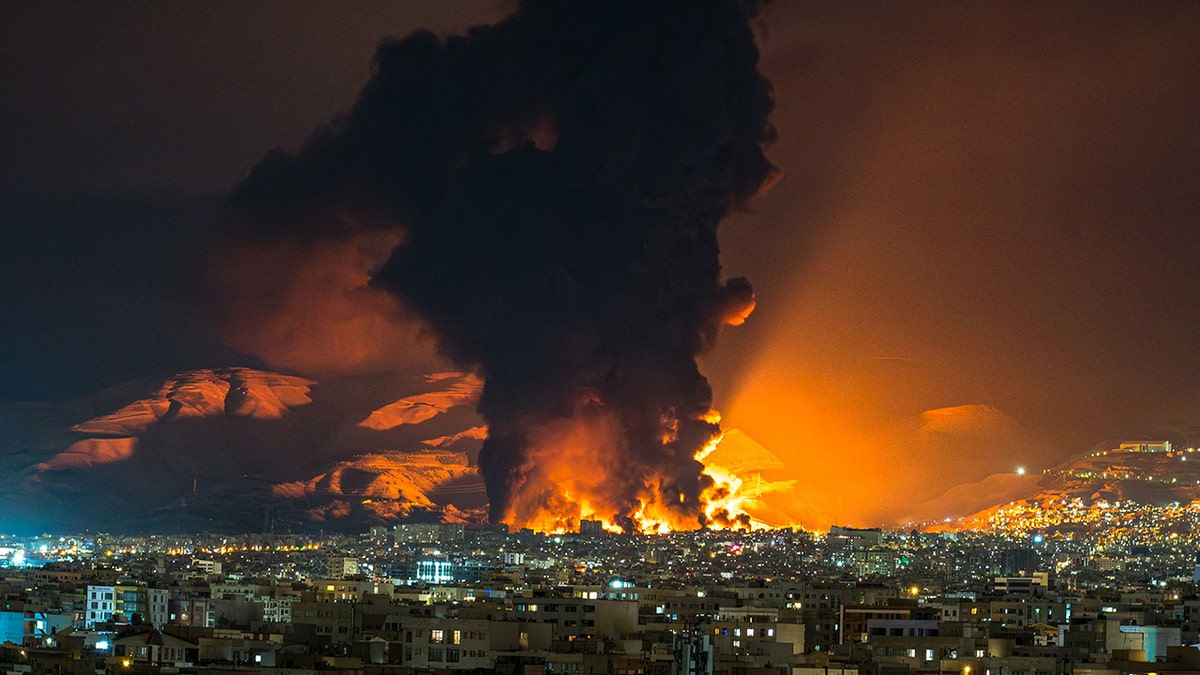
Smoke and flames rise at the site of airstrikes on an oil depot in Tehran on March 7, 2026. (Sasan / Middle East Images / AFP via Getty Images)
However, much of Washington still approaches Iran as a negotiating partner. For decades the strategy has been the same: diplomatic frameworks, sanctions relief and meetings to moderate Tehran’s behavior, even pallets of cash. However, a regime built on proxy warfare and regional destabilization is unlikely to abandon that strategy through negotiations alone. That reality helps explain why the United States is confronting the same Iranian threat today that it faced 40 years ago.
The historical record undermines the diplomatic theory. As negotiations dragged on, Iran expanded its proxy networks and led 160 attacks on U.S. forces in Iraq and Syria, just from October 2023 to February 2024. While policymakers debated strategy in Washington and Europe, Tehran continued building missiles and expanding militias to pressure the United States and its allies.
This is why the Fox News poll is more than a snapshot of voter sentiment. It exposes a deeper divide in American foreign policy, thinking it is not Republican versus Democrat, but voters versus the foreign policy establishment. Americans have formed their own conclusions after decades of watching Iran use intimidation, violence and proxy militant groups to destabilize entire regions.
IRAN WAR, 11 DAYS IN: US CONTROLS SKIES, OIL SURGES AND THE REGION BRACES FOR WHAT’S NEXT
The regime has repeatedly tested American resolve through asymmetric threats designed to create pressure without triggering full-scale war. This consistent pattern makes clear that Iran’s strategy is confrontation, not regular geopolitical rivalry. That reality explains why public opinion is significantly hawkish rather than supportive of more negotiations. For many Americans, the lesson of the past 40+ years is straightforward: Iran responds far less to engagement than it does to credible deterrence.
Deterrence, in this context, is about credibility. History shows aggressors are far less likely to escalate when they believe aggression will bring immediate and severe consequences. For decades, Iran has operated in the gray zone — using proxy militias, cyber operations and maritime disruption to pressure the United States while avoiding direct confrontation. That strategy has worked, allowing Tehran to expand missile capabilities and its terror network while America’s responses appeared inconsistent.
CLICK HERE FOR MORE FOX NEWS OPINION
Washington’s foreign policy establishment often overlooks that voters want results rather than another cycle of policy debates built on theory. That disconnect is becoming increasingly difficult to sustain because foreign policy must eventually align with the public’s understanding of national security threats.
The gap in perspective is now producing an equally glaring political divide. When voters believe, policymakers are unwilling to confront direct threats to Americans, trust in leadership erodes. National security debates look detached from reality while Americans face the consequences from attacks on U.S. forces, rising energy costs, and proxy conflicts spreading across the Middle East.
However, much of Washington still approaches Iran as a negotiating partner. For decades the strategy has been the same: diplomatic frameworks, sanctions relief and meetings to moderate Tehran’s behavior, even pallets of cash.
CLICK HERE TO DOWNLOAD THE FOX NEWS APP
While the American response has often been inconsistent, Iran has maintained a clear geopolitical strategy: funding terrorist networks, arming proxy militias, threatening strategic shipping routes and exploiting regional instability to expand its influence.
After decades of terrorism, proxy warfare and regional destabilization, Americans no longer see Iran as a diplomatic puzzle waiting for another round of ineffective negotiations. They see a strategic threat that requires credible deterrence. The poll confirms that voters have already reached that conclusion. The real question now is whether Washington’s foreign policy establishment is willing to acknowledge the same reality.
CLICK HERE TO READ MORE FROM MEHEK COOKE