More kids are in ERs for tooth pain. Trump cuts and RFK Jr.’s anti-fluoride fight aren’t helping.

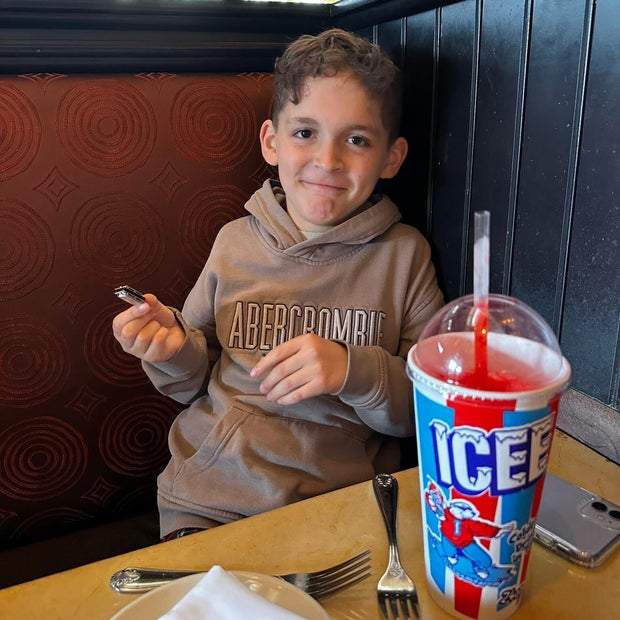
Eight-year-old Jonah woke up one May morning with a swollen face and a toothache. He refused the pain medication that his mom, Geneva Reynolds, tried to give him. He didn’t sleep or eat and cried constantly.
Within a few days, Reynolds became so desperate that she and her husband had to physically restrain Jonah, dumping pain medication down his throat as he screamed in pain.
“It broke our hearts,” said Reynolds, who lived in Georgetown, Kentucky, at the time. “And I remember just thinking that it shouldn’t have to come to that.”
Reynolds couldn’t find a dentist with an opening who could treat Jonah, who is autistic and often resists dental exams due to hypersensitivity and anxiety. Over the course of five days, Reynolds took Jonah twice to a nearby emergency room as he struggled with persistent pain and a fever due to a likely infected tooth with an exposed nerve. The ER had no dentists; both times, the family was sent home with only pain medication and an ice pack.
Across the nation, more children are entering ERs for preventable tooth problems. Dentists, hygienists, and researchers attributed that trend to a shortage of pediatric dental care professionals in rural areas and worsening oral hygiene since the COVID-19 pandemic. Tens of thousands of kids end up in the hospital for dental emergencies each year, according to Melissa Burroughs, senior director of policy and advocacy at the national health nonprofit CareQuest Institute for Oral Health.
ER visits for tooth problems unrelated to physical injuries rose almost 60% nationally for children under 15 years old from 2019 to 2022, according to a report released late last year by CareQuest. And local data reflects that national trend: At Children’s Hospital Colorado in the Denver area, nontraumatic dental cases, such as cavities or gum infections, in its ER increased 175% from 2010 to 2025, according to hospital spokesperson Sarah Bonar. In Kentucky, where Jonah lives, children’s visits to the ER for dental problems rose 72% from 2020 to 2024, according to the state.
Geneva Reynolds
Policy changes under the Trump administration are poised to worsen the trend. President Donald Trump’s 2025 federal budget reconciliation law, known as the One Big Beautiful Bill Act, called for billions in cuts from Medicaid, which may force states to limit or drop dental coverage from the public insurance program for those with low incomes or disabilities. New eligibility requirements for Medicaid in some states could affect kids’ access to dental care, even though children are guaranteed dental coverage under the program. Research shows that when parents lose Medicaid, even kids with coverage are more likely to have untreated cavities and less likely to go to a dentist.
The Trump administration has also promoted skepticism about fluoride. Decades of research show that fluoride in drinking water and topical fluoride treatments dramatically reduce tooth decay and prevent cavities. In recent months, the Food and Drug Administration warned health professionals against the use of fluoride supplements and the Environmental Protection Agency released an assessment of “potential health risks of fluoride in drinking water.” Health and Human Services Secretary Robert F. Kennedy Jr. has called fluoride a “neurotoxin” and “industrial waste.” A 2025 study in JAMA Pediatrics linked high levels of fluoride with lower IQ in children — but only at concentrations far exceeding the recommended level in public drinking water.
Donald Chi, a pediatric dentist at the University of Washington who studies fluoride hesitancy, worries that these anti-fluoride stances will further erode trust in fluoride treatment. Since the start of 2026, lawmakers in at least 15 states have introduced bills prohibiting or limiting fluoride in public drinking water. Utah and Florida in 2025 became the first states to enact fluoride bans.
“Will that have an effect on cavity rates?” Chi asked. “Absolutely.”
Severe dental cases rise
Pediatric dentists Katherine Chin and Chaitanya Puranik said they are treating more patients like Jonah at Children’s Hospital Colorado. More severe cases have become more common, too. Puranik said he used to typically see patients with only one cavity, but now his patients are often coming in with tooth decay throughout their mouth.
During the pandemic, many dental offices closed temporarily, and studies show children also increased their sugar intake, a major risk factor for cavities. Severe cavities that lead to tooth extraction can affect children’s developing jaws, sometimes causing long-term problems with talking or sleeping.
Millions of people live in dental care shortage areas in the U.S., with scant dentists within driving distance. On top of that, only 1 in 3 dentists treat Medicaid patients, due to low reimbursement rates, which are on average less than 40% of their typical dental charges, according to the American Dental Association.
Children with intellectual or developmental disabilities may especially struggle to access quality dental care. Few general dentists have sufficient pediatric training to care for kids with disabilities such as Jonah, who are easily overwhelmed or need to be sedated for an exam, according to KFF, a health information nonprofit that includes KFF Health News. Over 26% of children have special health care needs, and those children are twice as likely to have unmet dental needs. Their parents are also more likely to report challenges finding a dentist.
When he was younger, Jonah would not let his parents brush his teeth, which led to cavities in his baby teeth, his mother said. After Jonah’s first visit to the ER, Reynolds found a general dentist with an opening. But unlike a trained pediatric dentist, she said, the dentist did not know how to examine Jonah in a way he could tolerate and wasn’t prepared to provide sedation. Jonah left without treatment and was soon back in the ER when his fever returned.
Geneva Reynolds 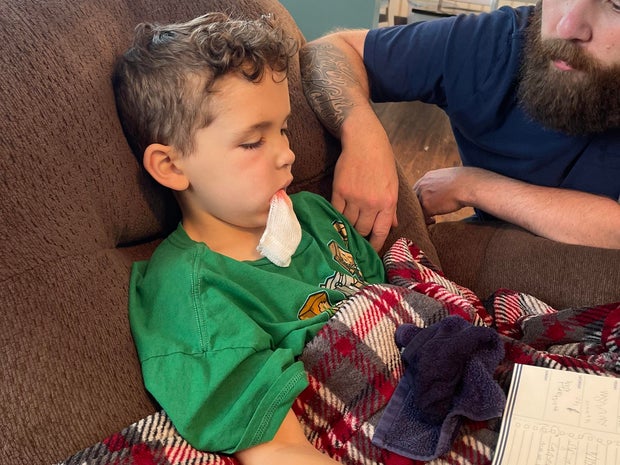
ERs rarely provide solutions
Bradley Weitz, a pediatrician in Washington County, Maine, said he is fielding “the most horrifying cavities” at Down East Community Hospital.
ERs are often ill-equipped to treat dental concerns, Weitz said. Similar to the ER Jonah went to in Kentucky, Down East has no dentists on staff. Weitz often finds himself prescribing antibiotics as a temporary measure.
“But a month later, they’re back again because it’s flaring up again,” Weitz said.
As a potential solution, states such as Maine and Alaska are proposing to use money from the $50 billion Rural Health Transformation Program to develop the oral health workforce or to create specialized dental care centers, which can better serve children with special health care needs on short notice. But those initiatives won’t address the loss of coverage anticipated from Medicaid cuts. California last year awarded $47 million in state grants to develop or expand over 120 dental facilities to serve patients with special health care needs.
Jonah’s dental emergency cost Reynolds a week of work from her job as a dog groomer and Jonah three days of third grade, plus hundreds of dollars in out-of-pocket costs.
Eventually, Reynolds found an oral surgeon who extracted the tooth. But even that went poorly, she said. When Jonah became upset over a needle stick, the surgeon threatened to hold him down, Reynolds said. She said the surgeon left quickly after the procedure and never gave her a clear diagnosis of what caused Jonah’s pain. The procedure did resolve his toothache, but Reynolds said more professionals should know how to handle cases like Jonah’s, with sensitivity to the families. Four years later, forcing Jonah to take his pain meds still lives fresh in her memory.
“That will never leave my mind,” Reynolds said.
KFF Health News is a national newsroom that produces in-depth journalism about health issues and is one of the core operating programs at KFF — the independent source for health policy research, polling, and journalism.