An artist, a geophysicist and a fruit seller: Accounts of Iran’s brutal crackdown leak out

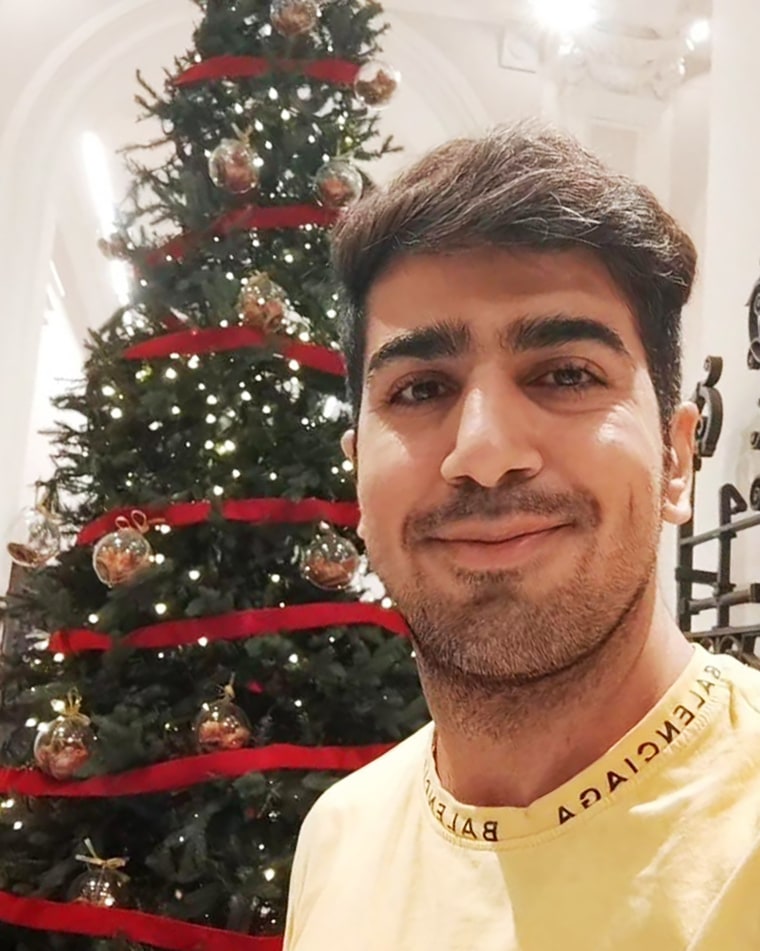
Yasin Mirzaei Ghalazanjiri
A geophysics graduate student, Yasin Mirzaei Ghalazanjiri was studying in Italy when he decided to visit family in Kermanshah, a city in western Iran home to a large population of fellow ethnic Kurds, during his New Year’s university break. He joined friends and family at a large protest in Kermanshah on Jan. 8.
It did not seem dangerous at first, but that changed quickly. Ghalazanjiri was shot in the chest by a sniper bullet and died on the spot.
“When they shot Yasin, his family and friends were around him,” said a relative, who asked not to be identified because he was afraid Iranian security forces would harass or harm him outside the country or his family inside Iran.
“They wanted to take his body so it wouldn’t be grabbed by security forces. But at that same time, another one of our family members was shot in the face with pellets,” he added during a telephone interview.

The group decided to pull the wounded man to safety before going back for Ghalazanjiri’s body. By the time the gunfire had subsided, Ghalazanjiri had disappeared.
When family tried to find the body at the city morgue, they encountered rows and rows of unzipped body bags.
The security forces at the morgue gave the family a choice: either say that Ghalazanjiri was killed by “rioters” among the protesters or pay 700 million toman, approximately $7,000. They called it “haq-e tir,” or bullet price.
The family refused to accept the version of events pushed by the authorities and paid the money to get the body back. Even though the family paid, the security forces said they should keep quiet about the circumstances of his death or else they would rebury Ghalazanjiri in an undisclosed location.
A crowd showed up for Ghalazanjiri’s burial at a family plot in a rural area outside Kermanshah and chanted anti-government slogans despite the threats, according to his relative.
On Jan. 15, the rector of the University of Messina, where Ghalazanjiri studied, expressed her condolences at a gathering of students, and Ghalazanjiri’s picture was placed on an empty chair.
The entire family is heartbroken by the loss of a vibrant young man who had so much potential, his relative said.
“It’s not only Yasin. Anytime we see the protest videos, it makes us cry,” the relative said. “We’re human after all. We’re agonizing for everybody.”

Sadegh Ghodsi and Ilya Ghodsi
Sadegh Ghodsi, a 38-year-old Tehran fruit seller, was not politically active. But on Jan. 8, the father of two decided to attend a protest with his cousin’s son Ilya, 17, according to a source close to the family.
They were among other protesters in the Qaleh Hassan Khan neighborhood in western Tehran when security forces opened fire on the crowds, he said on condition of anonymity out of fear that Iranian security forces would harm him or his family.
Both were killed.
The family searched desperately for their bodies and eventually found them at the Kahrizak Forensic Medical Center south of Tehran. Videos that have leaked out of Iran and were verified by NBC News show rows and rows of body bags inside and outside the facility as families try to identify their relatives.
When family members found the bodies of Sadegh and Ilya, the authorities would not allow them to be removed. They, like other families, were offered a choice: pay a bullet price of 800 million toman, or about $8,000, or sign a document stating the two were members of the Basij, a paramilitary force overseen by the Islamic Revolutionary Guard Corps, who were killed by “terrorists.”
“They didn’t have the financial resources to pay. They didn’t have a choice, so they accepted,” the source close to the family said in a telephone interview.
“When the family received the bodies, there were so many other bodies they were only given half an hour in the mosque for a funeral service,” he added.