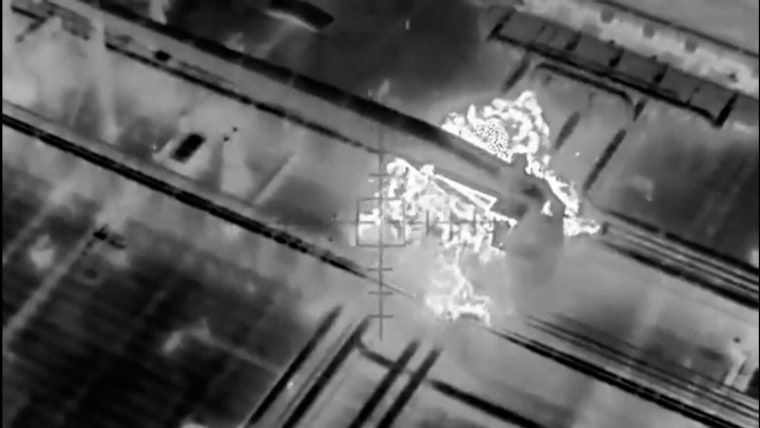
Critics who call Operation Epic Fury folly or a distraction are missing the point: Iran is just one front in an ongoing, evolving global contest that includes Russia and China.
It stretches to other fronts as well, though President Donald Trump has shut down the one in Venezuela and looks to have Cuba headed the same way.
But Tehran is much more entangled with Moscow and Beijing, exchanging arms, technical know-how and intelligence.
Even now, Russia is giving Iran high-quality intelligence to target missiles on US installations, experts conclude: Such precision is beyond the limited capabilities of the Islamic Republic’s handful of military-grade satellites.
The cooperation runs both ways: Tehran has been sending Shahed drones to Moscow for attacks on Ukraine for four years now; it even built a factory in Russia to produce thousands of these cheap, deadly unmanned aerial vehicles.
Monitoring how well the drones work, Iranian observers then worked to improve the tech, which likely helped the attack that killed six Americas.
But we have allies, too: American forces are now leveraging Ukraine’s substantial experience with defeating Iranian-made drones — tracking, jamming and shooting them down.
Indeed, President Volodymyr Zelensky is making Ukrainian specialists available to assist US interception of Iran’s drones before they can penetrate traditional defenses in the Middle East.
China, meanwhile, has provided Iran with arms and air-defense systems — with plans to upgrade the latter prevented by Epic Fury’s start.
That need was exposed by the complete failure of those systems in Venezuela, as US forces had no problem evading them as they deposed Nicolás Maduro — whose personal security was provided by Cuba, another way the alliance worked.
China has also been a voracious consumer of Venezuelan and Iranian oil (and Russian energy, too), gleefully avoiding international sanctions on these criminal regimes: Losing those supplies is a major strategic setback for Beijing, which has to fear a US embargo should hostilities break out.
Meanwhile, Iran’s proxies also serve its allies: The old Assad regime in Syria granted Russia a Mediterranean naval base, while the Houthis let Chinese and Russian ships transit freely even as they target other commercial boats in the Red Sea.
Indeed, the Houthis also get targeting info from the alliance.
Xi Jinping has been backing Vladimir Putin’s assault on Ukraine from the start, providing supplies and dual-use tech (as well as fighters from its North Korean satrap), while Moscow has provided Beijing invaluable expertise in developing next-gen nuclear powered ballistic-missile submarines.
For years, the West has hid its head in the sand as this dark alliance cooperated to forward every member’s goals; striking back at any part of it — as with the ongoing campaign to take out the “ghost fleet” of sanctions-busting oil tankers — hinders all of it.
And so Operation Epic Fury helps Ukraine fight off Russia and impeded China’s preparations to seize Taiwan.
Naysayers left and right have variously called helping Ukraine a distraction from facing China’s threat, insisted that boosting Israel is a distraction from countering Moscow or Beijing and now suggest this latest campaign somehow undermines us in those other struggles: They’re wrong on every front.
It’s so obvious, you have to wonder which critics are simply naive, and which ones are rooting for the other side.