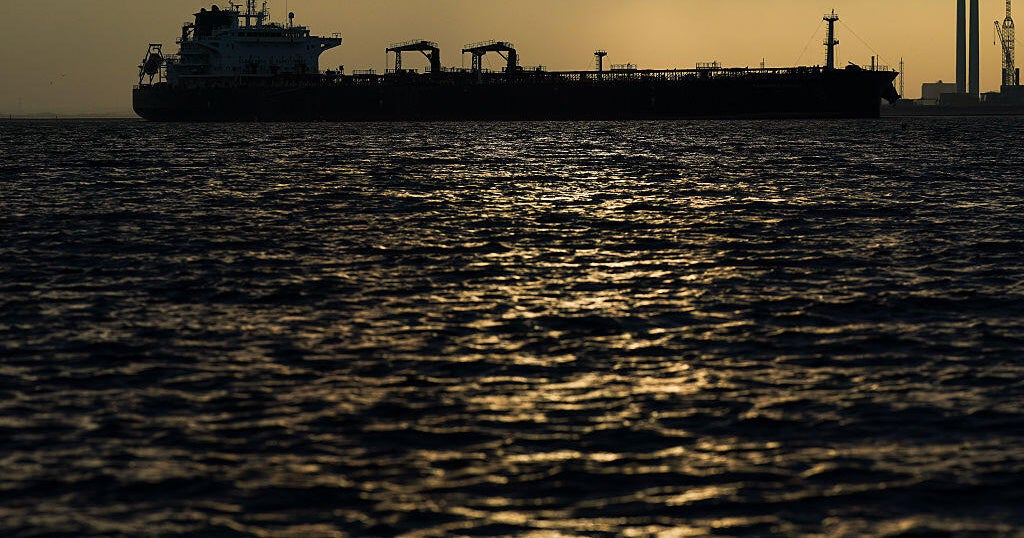
The U.S. is temporarily greenlighting the purchase of Russian oil that’s already at sea, Treasury Secretary Scott Bessent said Thursday, in the Trump administration’s latest move to loosen the wartime sanctions that restrict Russia’s oil industry as the world grapples with high oil prices.
The authorization will last one month, and applies to petroleum products from Russia that were loaded onto ships on or before Thursday, according to documents issued by the Treasury.
Bessent said the move will “permit countries to purchase Russian oil currently stranded at sea.”
“This narrowly tailored, short-term measure applies only to oil already in transit and will not provide significant financial benefit to the Russian government, which derives the majority of its energy revenue from taxes assessed at the point of extraction,” he wrote on X.
Some 124 million barrels of Russian oil are currently at sea globally, CBS News has learned.
The Treasury secretary said the administration is trying to “increase the global reach of existing supply,” as the U.S. and Israel’s war with Iran paralyzes the petroleum trade and oil prices hit their highest levels in years.
Last week, the Treasury issued a narrower sanctions license that allowed India to buy oil and petroleum products from Russia for one month. The Trump administration had previously heaped pressure on India to stop buying Russian oil.
The moves give oil importers a reprieve from the strict U.S. sanctions that have made it difficult to do business with wide swaths of the Russian economy, including its energy industry. Russia has faced tight sanctions since it launched a full-scale invasion of Ukraine in 2022.
The temporary reprieves have drawn stiff criticism from congressional Democrats, who argue they could enrich Russian President Vladimir Putin’s government and undermine sanctions designed to make it harder for Russia to finance its war against Ukraine.
Democratic Sen. Brian Schatz of Hawaii posted on X late Thursday, possibly in response to the sanctions relief: “Looks like we fought Iran and Russia won.”
Last week, Senate Minority Leader Chuck Schumer and 11 other Democrats castigated the Trump administration for granting a license for India to buy Russian oil. They argued the jump in oil prices has already offered Putin a windfall, and loosening sanctions could further benefit him.
“Instead of changing course, the President is only making this situation worse by handing Putin, his shadow fleet, and traders still dealing in sanctioned oil a free pass to increase oil shipments to Russia’s second-largest importer,” the Democrats wrote. “The new channels for evasion the President is opening, coupled with dramatically higher global energy prices, are giving Putin a huge financial boost and the means to continue his bloody war in Ukraine.”
A day before the Treasury rolled out Thursday’s sanctions license, Russian envoy Kirill Dmitriev met in Florida with U.S. negotiators Steve Witkoff and Jared Kushner, both sides said.
In a post, Dmitriev said the group discussed the “current crisis on global energy markets,” adding that the U.S. and other countries are beginning to understand the “destructive nature of sanctions against Russia,” according to a translation from Russian news agency Interfax. Witkoff said they discussed “a variety of topics.”
Shortly after Bessent announced Thursday’s sanction license, Dmitriev wrote on X: “Russian energy is indispensable to easing the world’s largest energy crisis. EU bureaucrats will soon be forced to recognize this reality, acknowledge their strategic blunders, and atone.”
The Trump administration is scrambling to deal with a supply crunch wrought by the war. Commercial shipping through the Strait of Hormuz — a chokepoint that normally carries 20% of the world’s oil — has slowed to a crawl as Iran carries out strikes on vessels and threatens shippers not to pass, severely limiting the amount of oil from major Arab producers that can reach global markets.
The international oil benchmark, Brent Crude, traded just above $100 per barrel for much of Thursday afternoon, up from around $72 per barrel the day before the war began in late February.
President Trump and top U.S. officials have floated a range of other options to boost supply. Some 172 million barrels of oil will be released from the U.S.’s Strategic Petroleum Reserve, and Mr. Trump has weighed having the U.S. Navy escort ships through the Strait of Hormuz or even “taking [the strait] over,” as he told CBS News earlier this week.