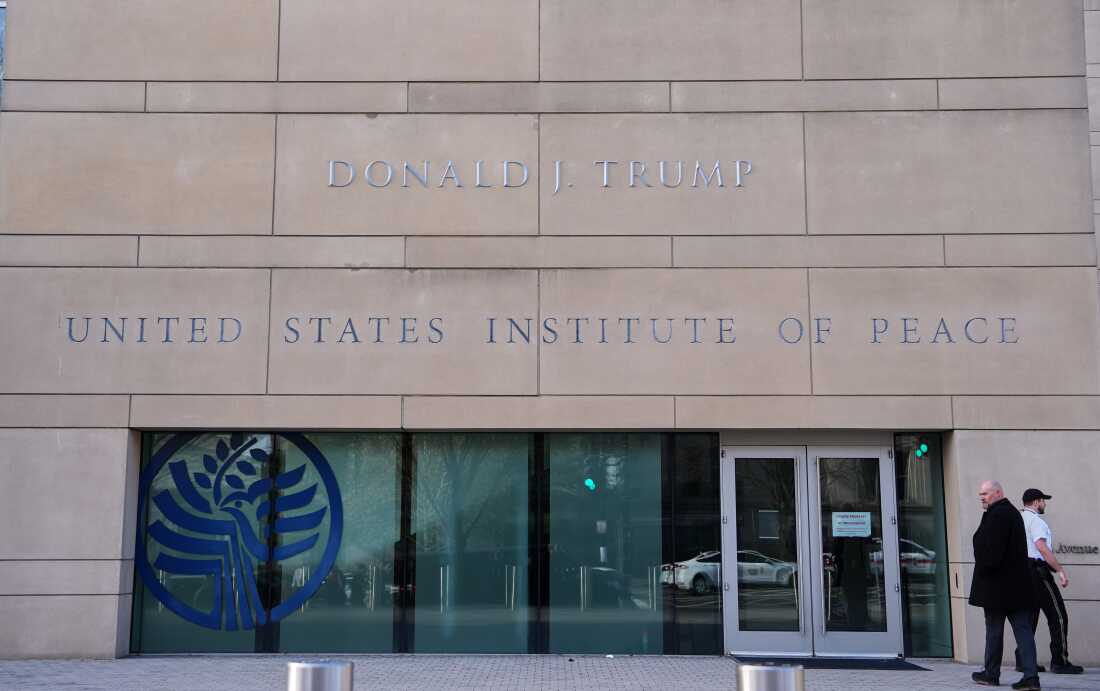
A judge on Monday declared the three-person leadership team of the New Jersey federal prosecutor’s office to be unlawful and said President Trump’s insistence on handpicking U.S. attorneys showed that the White House cared more about personal control than public safety.
The judge, Matthew W. Brann, was ruling on whether the three prosecutors who have led the New Jersey office since December were doing so lawfully. He also addressed the national trend in which the Justice Department fires judicially appointed prosecutors as soon as they take office.
Using italics that demonstrated the heightened tenor of his ruling, he wrote that the Trump administration had shown through both statements and actions that it cared far more about who was running the New Jersey U.S. attorney’s office “than whether it is running at all.”
Judge Brann pointedly said that the president’s continued reliance on unlawful mechanisms to appoint top federal prosecutors meant that “scores of dangerous criminals could have their cases dismissed or convictions eventually reversed.”
U.S. attorneys, who lead prosecutors’ offices in more than 90 districts, are typically nominated by the president and confirmed by the U.S. Senate. But a number of Mr. Trump’s favored nominees have been blocked by senators in their states, in some cases leading judges to appoint their own choices for the position.
During Mr. Trump’s second term, when judges have selected a U.S. attorney, the Justice Department has fired them. After it did so with an interim U.S. attorney in upstate New York recently, the deputy attorney general, Todd Blanche, wrote “Judges don’t pick U.S. Attorneys, @POTUS does. See Article II of our Constitution.”
Judge Brann, a federal judge who typically sits in Pennsylvania but was designated to handle the matter in New Jersey, referred to that post and others like it as “combative (and legally incomplete).” He said they clearly indicated that “the Department of Justice would not permit anyone to hold any United States Attorney’s Office if that person was not handpicked by the president.”
Since the summer of 2025, the New Jersey prosecutor’s office has been a casualty of the chaos created by the Trump administration’s moves to retain control.
In August, Judge Brann ruled that the former U.S. attorney there, Alina Habba, had remained in office in violation of the law. After an appeals court agreed with him, Ms. Habba left the office in December and was replaced by three prosecutors: Philip Lamparello, Jordan Fox and Ari Fontecchio. Since then, they have been dividing the responsibilities of the U.S. attorney between them.
But Judge Brann said that the arrangement was legally unworkable. On Monday, he wrote that the Trump administration had again overstepped its authority, as it claimed to have discovered “enormous grants of executive power hidden in the vagaries and silences of the code.”
“Why does the fate of thousands of criminal prosecutions in this district potentially rest on the legitimacy of an unprecedented and byzantine leadership structure?” he asked. “The government tells us: The president doesn’t like that he cannot simply appoint whomever he wants.”
Ms. Habba, a former personal lawyer to Mr. Trump who now works at the Justice Department in Washington, responded on social media, calling the ruling “ridiculous.”
“Judges may continue to try and stop President Trump from carrying out what the American people voted for, but we will not be deterred,” she said. “The unconstitutionality of this complete overreach into the Executive Branch, time and time again, will not succeed.”
Judge Brann said that any additional attempts “to unlawfully” direct the leadership of the office would result in dismissals of pending cases, a grave threat underscoring the judge’s frustration. He said he would pause his own decision to allow the government to appeal.
Judge Brann, the chief judge in the Middle District of Pennsylvania, was a member of the conservative Federalist Society and active in Republican Party politics before he was nominated to his post by former President Barack Obama.
He was assigned the case over the summer after two defendants charged with crimes in the District of New Jersey challenged Ms. Habba’s authority and sought to have the charges against them dismissed. After Ms. Habba quit and Attorney General Pam Bondi named three prosecutors to jointly lead the Newark office, more challenges were filed, leading to Monday’s decision.